Trailer Brakes Made Simple: How They Work, Types, and How to Choose
Ensuring you have appropriate brakes fitted on a trailer so that you are able to apply the right level of braking force plays a crucial role in ensuring your towing needs are being met while ensuring on-road safety.
Trailer brakes control the braking force applied, so having the right setup and brakes fitted also helps to give you a smoother ride, improve stopping distances and prevent accidents. Trailer brakes also limit the risk of the brakes overheating on the tow vehicle during long descents, and help eliminate trailer sway during heavy braking or sudden manoeuvres.
If you're planning on buying a new trailer, understanding how the different types of trailer brakes function will ensure you make an informed decision, and that you choose trailer brakes that are suitable for the loads you carry and compliant with state and federal road regulations.
Each state in Australia has its own regulations in place requiring trailers over a specific weight to have brakes — in South Australia, this means that any trailer with a gross trailer mass (GTM) over 750 kg must be fitted with a braking system.
In this blog, or team will look at the main types of brakes and braking systems, how trailer brakes work, the different braking options available, and how to ensure you make the right choice for your towing needs.
How trailer brakes work
While trailer brakes operate independently from the brakes on the tow vehicle, the two are nevertheless synchronised. When pressure is applied to the brake pedal in the vehicle, either a mechanical or electrical signal is sent to the trailer brakes, and friction is then applied to the wheels via the brake pads.
Mechanical trailer brakes
With mechanical trailer brakes (also called override or over-run brakes), cables connect the trailer brakes to the hitch. As the towing vehicle slows down, the trailer's momentum activates an override mechanism and the brakes are engaged.
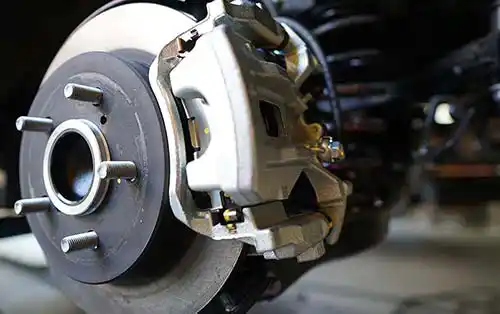
Mechanical disc brakes with calipers will usually be sufficient for smaller trailers (up to a gross trailer mass of 2 tonnes) that are primarily used for towing light loads.
Hydraulic brake upgrade
Upgrading from mechanical to hydraulic disc brakes improves stopping power in all types of towing conditions, as hydraulic brakes offer more efficiency and consistent braking than drum brakes.
However, hydraulic brakes are different to electric-over-hydraulic brakes, which create braking force through a combination of electric signals and hydraulic pressure.
Electric trailer brakes
You can upgrade mechanical disc brakes to electric brakes on any of our single axle trailers, or the front axle on our tandem trailers.
How electric brakes work
With electric trailer brakes, a controller unit operated from driver's seat in the towing vehicle sends an electrical current to the magnets in the trailer hubs, which expand the brake shoes and creates the friction required to control deceleration and slow the trailer.
Electric brakes typically suit tandem and tri-axle trailers when towing heavier loads. The electric brake controller in the towing vehicle uses inertial triggers to ensure that braking is proportional and controlled, while the braking force can be adjusted as required.
Breakaway system
In South Australia, trailers with a gross trailer mass (GTM) of 2,000kg or more are required to have electric brakes with a brake controller and breakaway system installed.
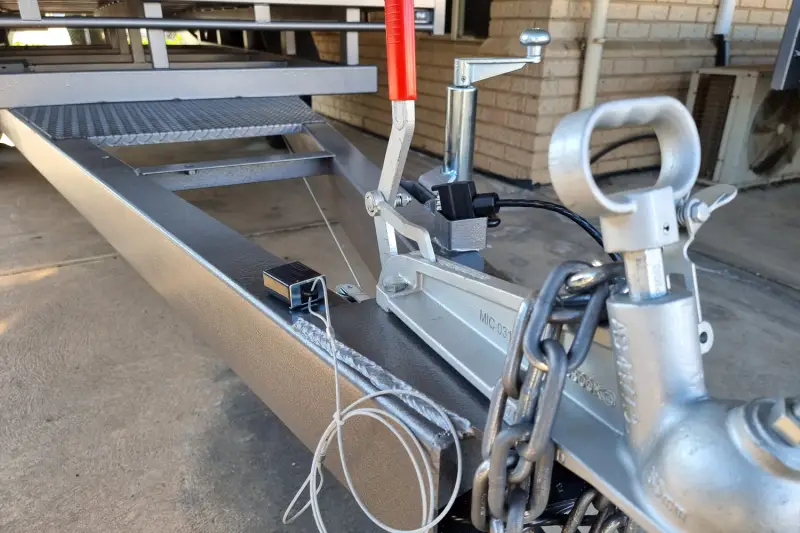
A breakaway system automatically applies the brakes if the trailer becomes separated from the towing vehicle, ensuring greater all-round safety.
Trailer brake safety and maintenance
Regardless of the type of trailer brakes you choose, it's essential for control that the trailer and towing vehicle are working in sync. This ensures that trailer momentum does not push the vehicle forward when braking, especially important on uneven or steep terrain, or when towing on wet roads.
Regular inspection of brake pads, drums and cables to ensure there is no excessive wear and tear is highly recommended to ensure safe operation. Regularly cleaning components and lubricating moving parts will help to prevent corrosion, while the adjustable electric brake controller unit should also be calibrated regularly to ensure accuracy.
We also recommend testing trailer brakes regularly on a safe, quiet road to ensure the braking setup is functioning as it should be, and so that any adjustments needed can be made.
How to choose the right trailer brakes
When deciding what sort of trailer brakes you need to have installed, it is important to understand the dimensions, ATM and GTM of any trailer you're considering buying.
If you opt for a single axle trailer, such as a small box trailer, enclosed trailer, motorbike trailer or tradesman trailer, and are unlikely to be towing heavy loads, then mechanical brakes will be sufficient to ensure you are able to tow safely.
Tandem axle and tri-axle trailers with a GTM below 2,000kg can be fitted with mechanical brakes, however we recommended that you have electric trailer brakes installed as they provide greater on-road safety and control when hauling heavier loads.
If you're looking at a heavier trailer with a gross trailer maser (GTM) over 2 tonnes, then you are required in every state in Australia to have electric trailer brakes with a breakaway system fitted.
Need help and advice on choosing the right trailer brakes?
Understanding how trailer brakes function, and what sort of system is going to be right for the trailer and loads you carry, will ensure you are able to tow with confidence. In summary, the main types of trailer brakes we offer are:
Mechanical brakes (also known as override brakes) use mechanical systems rather than hydraulic pressure are generally able to be installed on trailers up to 2000 kg GTM.
Electric brakes are operated by a controller in the towing vehicle that enables the trailer brakes to be manually applied by the driver. The delay and force can be adjusted depending on the specs of your trailer and vehicle, and so electric brakes provide a safe and highly efficient trailer brake system.
Talk to Basic Trailers about trailer brake installation
If you need expert assistance and advice about any aspect of trailer braking systems, electric brake controllers, towing vehicles or brake maintenance, get in touch with the friendly, knowledgeable team at Basic Trailers.
Simply email info@basictrailers.com.au, call us by dialling 1300 770 770, or drop by our Pooraka trailer workshop and we'll be happy to help.