What Sort Of Brakes Does Your Trailer Need
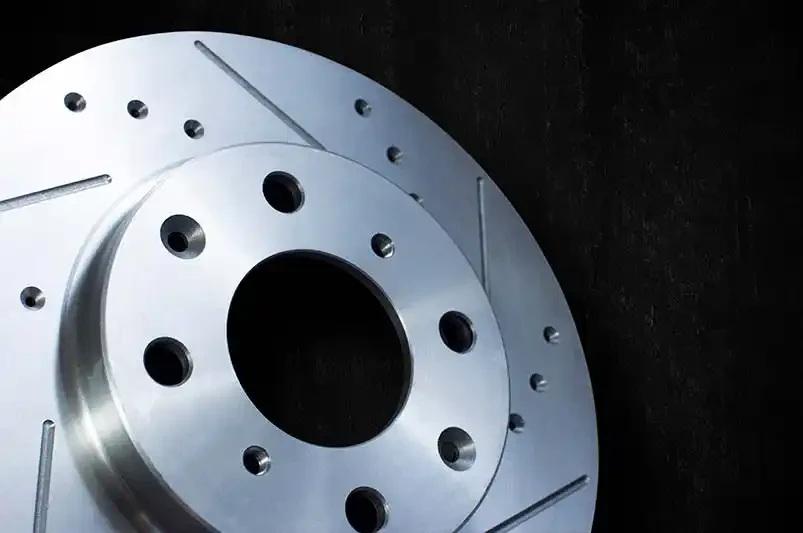
Trailer brakes to fit your towing needs
When you're buying a new trailer, both its overall size and the weight of the loads you'll be carrying will help to determine the type of trailer brakes that you need.
In addition, in South Australia there are regulations in place regarding the type of brakes that are legally required on trailers over a certain size. If the gross trailer mass (GTM) of your trailer exceeds 750 kg, then brakes must always be fitted. (GTM is defined in SA law as “the maximum loaded mass transmitted to the ground by the axle, or axles, of the trailer when coupled to a towing vehicle.”)
In this guide we discuss the different types of trailer brakes available, the benefits of having the main types of brake fitted, and how choosing suitable brakes for your trailer will mean you're able to tow safely and with efficiency, reducing the risk of accidents while enjoying a smoother ride.
How trailer braking systems are designed
Trailer braking systems are designed to improve vehicle safety by reducing stopping distances. They do this by applying friction to the brake pads on the rims on at least one axle so as to create braking force sufficient to slow both the trailer and vehicle smoothly.
Mechanical brakes
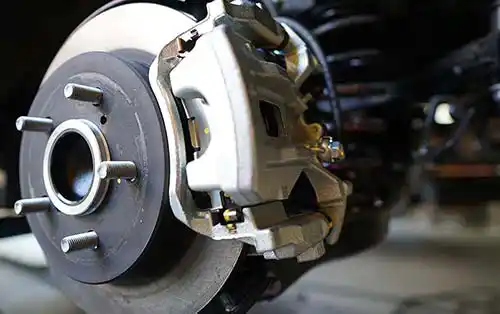
With mechanical trailer brakes (also called override or over-run brakes), the trailer brakes are connected to the hitch with cables. The brakes are engaged when the towing vehicle slows down, at which time the override mechanism is activated.
Mechanical disc brake setups are legal in South Australia on smaller trailers up to a GTM of 2 tonnes, but we recommend upgrading to electric trailer brakes on a tandem trailer, car trailer or tipper trailer for extra safety and control.
Electric trailer brakes
Electric brakes are typically installed on tandem and tri-axle trailers that tow heavier loads.
Electric trailer brakes are operated by a controller unit that is located within reach of the driver's seat in the towing vehicle. When activated, an electrical current is sent to the magnets in the hubs, and this expands the brake shoes, creating friction and slowing the trailer and vehicle.
Electric trailer brake setup
If you have an electric brake controller fitted in your towing vehicle, the brakes need to be configured so that they can be operated safely and apply appropriate braking force.
To test that the brake controller and braking system have been setup correctly, drive at 40 km/h on a quiet road and gently apply the brakes. If they lock up, too much braking force is being applied, or if it feels as though the towing vehicle is being pushed by the trailer when slowing down, more braking power is required.
Electric brakes are adjustable and require regular calibration for accuracy. Regular maintenance is also required.

Brake controllers and breakaway systems
In South Australia, it is a legal requirement that all trailers with a gross trailer mass (GTM) of 2,000kg or more have electric brakes with a brake controller and breakaway system fitted.
Breakaway systems are designed to apply the brakes automatically if the trailer gets separated from the towing vehicle. This is essential not only for your own safety, but the safety of other road users as well (even though all of our trailers are fitted with safety chains). Breakaway systems must be capable of holding brakes for at least 15 minutes if uncoupled.
Breakaway systems can be fitted to any of our 2,800 kg ATM, 3,200 kg ATM and 3,500 kg ATM trailer upgrades so that you always have control when towing heavier loads.
Trailer braking system maintenance
To confirm that your brakes are performing as they should, they should be tested at regular intervals on quiet, safe roads. It also important to inspect trailer brake pads and drums regularly for excessive wear, and to clean and lubricate moving components to prevent corrosion.
Get expert advice on trailer brakes from Basic Trailers
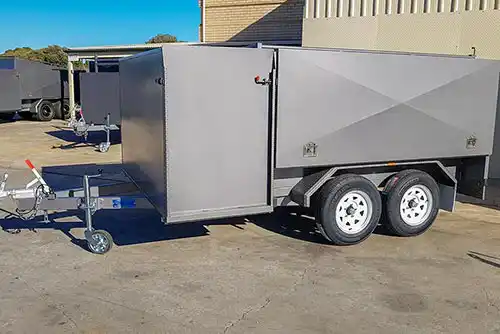
In summary, mechanical or over-run brakes are permitted on trailers up to 2000 kg GTM, and so are suitable for single axle box trailers, enclosed trailers, motorbike trailers or tradesman trailers. If you are not expecting to be towing heavy loads, then mechanical brakes will be sufficient to ensure you are able to tow safely.
Tandem axle and tri-axle trailers can also be fitted with mechanical brakes (provided they have a GTM below 2,000kg), but we recommended having electric trailer brakes installed for greater on-road control and safety.
If you're trying to decide what type of new trailer to buy, or need guidance on a suitable trailer braking system, don't hesitate to get in touch with Basic Trailers for some first-hand, expert advice. You can also access the trailer range pages of our website to see which trailers have which brakes fitted as standard, as well as the different braking system upgrades that are available.
Call Basic Trailers on 1300 770 770 or email us at sales@basictrailers.com.au and we'll be happy to help and give you any advice you need.