Trailer Specs Explained: What New Owners Need to Know About ATM, GTM and More
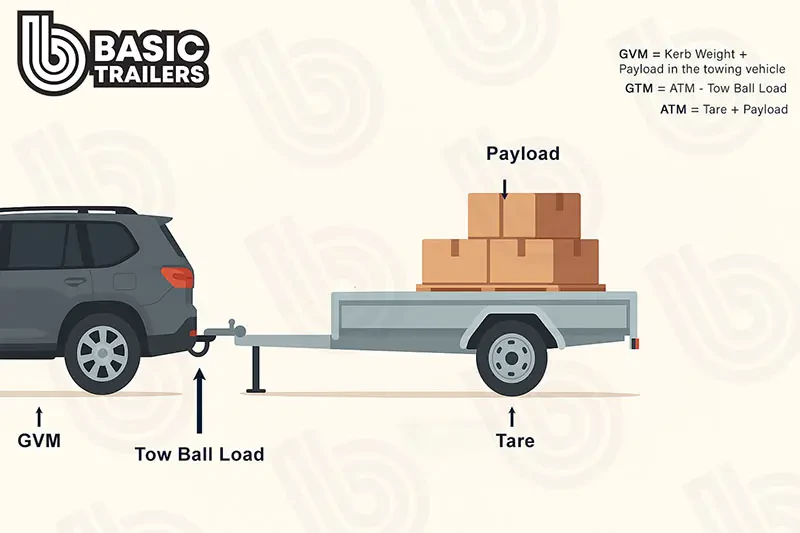
One of the biggest sources of confusion for new trailer owners is understanding the different terminology concerning trailer weight, and the maximum towing capacity of their vehicle and trailer.
There are a range of different acronyms, like ATM and GTM, as well as terms like tare weight and payload, that are regularly referred to, and it's important to understand these as well as the legal requirements around maximum trailer loads and safe towing capacity actually is.
In this guide, we'll explain what each of these trailer weight terms means, the difference between them, and how to determine whether the actual weight of the trailer you're looking to buy is right for the towing capacity of your vehicle, so that you can be fully informed about the trailer type, size and weight that will best meet your needs.
Trailer weight and towing vehicle legal requirements
It's important to know that towing when exceeding the maximum weight can lead to you receiving a heavy fine and demerit points.
Towing too much weight can also put stress on the tow vehicle and significantly shorten its operating life, as well as lead to a loss of control and dangerous trailer sway, especially at higher speeds.
Other features it is helpful to know about when you're searching is that all new trailers built since July 1, 2023 are required to comply with Australian Design Rules, while any trailer manufactured after August 1989 should also display an ATM plate.
Confused by ATM, GTM, GVM and payloads? Here’s what they really mean
When assessing the specifications and features of a new trailer, and whether the vehicle and trailer combination is going to meet your transport needs, it is helpful to understand what is meant by ATM, GTM, GVM, GCM, tare weight, payload and tow bar load.
Tare weight
Tare weight is the total weight of a trailer when it's empty, taking into account features and accessories it's fitted with at the time it's manufactured.
It does not include any cargo, tools, equipment or accessories that have been added to the trailer after it leaves our workshop.
Aggregate Trailer Mass (ATM)
ATM is the total weight a trailer can carry when fully loaded and carrying its maximum payload while not connected to a vehicle (but supported by its jockey wheel).
Another way to look at ATM is tare weight plus maximum cargo load. For example if a trailer's tare weight is 600kg and its load capacity is 1400kg, its ATM would be 2000kg. The tow ball load of a towing vehicle should typically be around 10% of the aggregate trailer mass.
In South Australia, trailers with an ATM below 4.5 tonnes are classified as light trailers, while trailers built since August 1989 must display their aggregate trailer mass.
Choosing a trailer with the right ATM, taking into account the tools, equipment and other loads that you regularly carry, as well as your vehicle's specifications, is essential. At Basic Trailers we design and build a range of trailers manufactured from 100% Australian steel in different ATM ratings to suit your towing needs.
Gross Trailer Mass (GTM)
GTM is the weight of a fully loaded trailer when it's connected to a tow vehicle. It's generally less than the ATM because some of the load is transferred to the vehicle through the tow ball.
The gross trailer mass should determine the axle and suspension configuration, as it is the maximum trailer weight that can be safely supported when the trailer is hitched to a vehicle. Knowing the gross trailer mass will therefore help you avoid loading the trailer with more weight than the axles and wheels can bear.
Gross Combined Mass (GCM)
Gross Combined Mass (or Gross Combination Mass) is the maximum legal combined weight of your loaded towing vehicle and your loaded trailer together.
This includes all passengers, fuel, cargo and equipment, as well as the tow ball mass.
Payload
Payload capacity is the weight of all the cargo loaded onto the trailer; it works out as the trailer's ATM minus the tare weight.
Alternatively, the full weight of the trailer (e.g., ATM or gross trailer weight) can be determined by combining tare weight with payload capacity. You should always make sure that any loads you carry are within payload capacity to ensure safe towing.
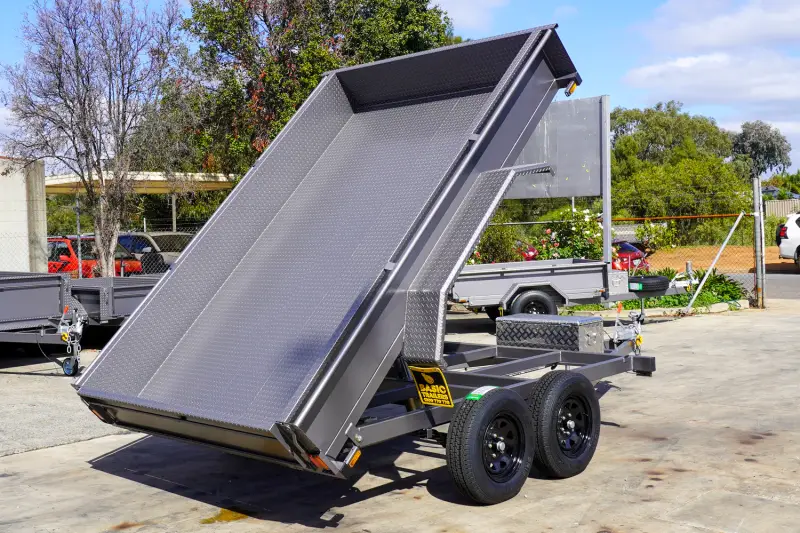
Get the right ATM and suspension combination and specifications for safe towing
Buying a trailer with the right aggregate trailer mass (ATM) for your needs also requires choosing the right suspension system.
Lighter trailers with an ATM under 2,000kg can be fitted with either slipper or eye-to-eye spring suspension.
Tandem axle trailers or trailers configured to carry heavier cargo will be better suited to load sharing rocker roller suspension. This is because rocker roller suspension distributes weight evenly across both the front and rear axles, providing better balance and towing stability while also reducing stress on individual mechanical components.
Is your vehicle up to the task?
Understanding trailer specifications is important, but so is knowing the towing capacity of your vehicle.
Braked towing capacity, GVM, GCM (Gross Combination Mass) and tow ball load limits all affect the size and weight of fully loaded trailer that you can tow safely. These details, including maximum trailer weight limits, can generally be found in your vehicle's handbook.
If you don't have a great deal of experience towing trailers, one of the most important things to know is that the heavier the trailer, the greater the stopping distance the towing vehicle will require, i.e., a fully loaded car trailer, boat trailer, caravan or camper trailer will need more considerably more stopping room than a light weight, single axle box trailer.
Helpful tips for safe towing
1. Don't exceed the ATM of the trailer or your vehicle's tow capacity.
2. Distribute the weight of the load evenly across both the front and rear axles of the trailer to reduce sway, enhance braking capacity and ensure a smoother ride.
3. Choose brakes and suspension that are right for your vehicle and trailer combination
4. Don't neglect maintenance, especially of the axles, brakes and couplings, as this will extend the operating life of your trailer.
5. As well as knowing the maximum towing capacity of your vehicle and trailer, and the stopping distance required when it's fully loaded, you should also make sure that you're familiar with state road rules such as speed limits when towing.
Talk to Basic Trailers if you're looking for a new trailer
As specialist trailer manufacturers, we can help you with everything you need to know about trailer weight, aggregate trailer mass, tow bars and tow vehicles.
Our friendly team will help you choose the right trailer, and make sure that you are set up to to safely and legally tow.
Get in touch with Basic Trailers on 1300 770 770, or email us with your enquiry, and a member of our team will be happy to answer any questions you may have about trailer ATM, GTM, GVM and payloads.