Open, Cage or Enclosed? 2026 Utility Trailer Guide
Choosing the right trailer, whether it's for domestic, commercial or industrial use depends on a variety of different elements. You need to take into account the sort and size of loads you regularly carry, how secure you need your cargo to be both when parked up and on the road, as well as the sort of environment you operate in.
If you're considering whether to buy an open vs enclosed vs cage trailer, this post sets out the key benefits and advantages of each of these trailer types to help you make the right choice depending on your needs, how much money you want to spend, and the sort of gear you need to carry.
Open vs Cage vs Enclosed Trailers: Key benefits and advantages
A key difference between these three trailer types is the ease of access and the level of protection they provide.
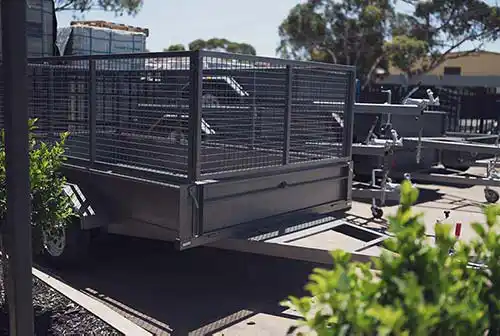
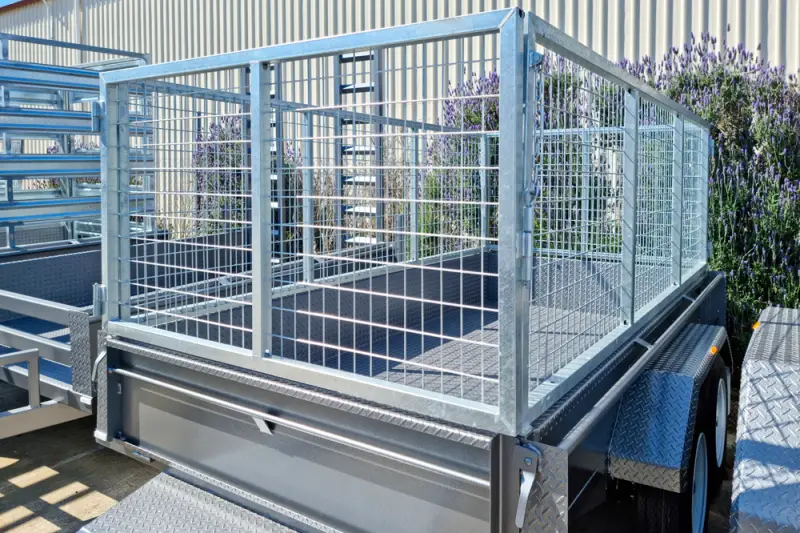
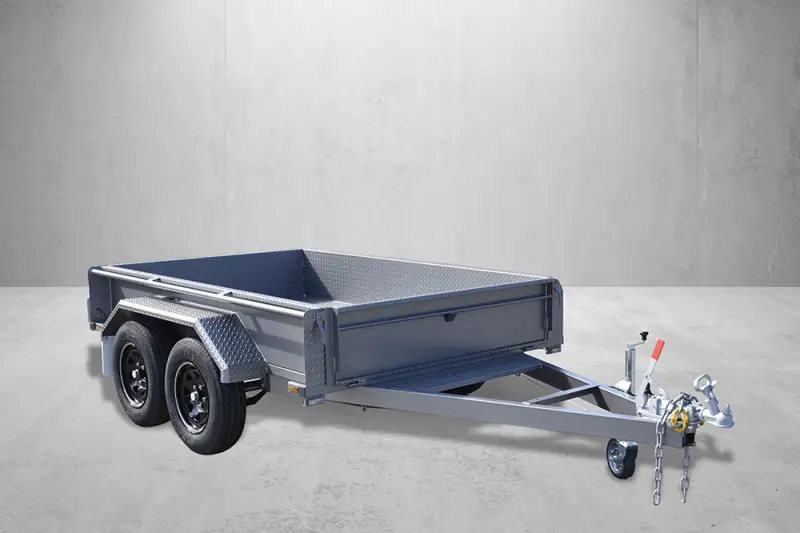
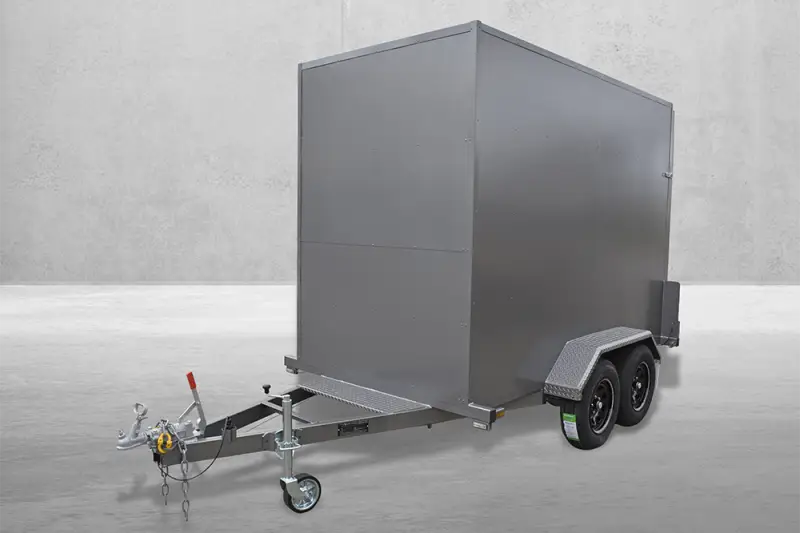
An open box trailer has low sides which makes loading and unloading by hand quick and easy to do, and offers versatility in terms of the types of load that can be carried. A cage trailer with mesh or steel sides (generally up to 900mm high) helps to keep cargo contained and makes transporting higher loads safer, although access is a little more limited. An enclosed trailer has a roof and solid walls, as well as lockable doors that provide full protection for tools and equipment from both theft and weather, and provides an ideal secure transport solution.
Trailer loading and access
Loading and unloading the sort of cargo and materials you regularly carry is always a key consideration when choosing the right trailer type for your needs.
Loading an open box trailer
Open trailers can be accessed from all sides as there are no walls or roof, and this makes it the easy loading option, especially for home users who will usually load and unload manually.
The open design means box trailers are a good choice for carrying home and garden waste, soil and sand, as well as bulky items like roofing and building materials (ensuring that any overhang is within legal limits). If required, an open box trailer can fitted with a tipper that makes loading and unloading even easier.
Loading a cage trailer
Cage trailers still offer relatively easy loading and unloading, but have the added advantage of high sides that stop items from falling out when in transit. The cage also means that carrying high loads is safer than when using an open trailer, and there are not the same size restrictions on the cargo as there are with an enclosed trailer.
Access to tools and materials is usually provided through gates at the rear of the trailer, or by forklift from above if required, and cargo can then be secured against the cage walls to keep it in place when transporting on rougher roads or long trips.
Loading an enclosed trailer
Enclosed trailers have a single access point through the rear doors, while the roof and walls limit what you can carry to some degree. However, at the same time the enclosed space provides full protection for your load from harsh weather conditions and road debris.
Ramps provide easy access in an enclosed trailer, as you can carry or wheel in tools and equipment, including bikes, wheeled machinery and other bulky items that might be challenging to lift into a cage trailer. In addition, enclosed trailers offer additional secure storage space when you're not towing as well.
Protection and security features of cage, open and enclosed trailers
Whatever sort of load you're carrying, protection and security will play an important role in choosing the right trailer for your needs.
Open box trailer protection and security
Open box trailers are uncovered and so don't provide any weather protection. Whether it's rain, road debris or dust, anything you're transporting will be exposed to the elements. If you're carrying garden waste or other materials that won't be impacted this won't be a problem, but items that need protection will be exposed in an open trailer.
Likewise, the open design means a box trailer will be susceptible to theft, so when you're trailer is parked it's not advisable to leave valuable bikes, tools or equipment in it when unattended overnight or on a worksite.
Cage trailer protection and security
A key advantage of transporting gear in a cage trailer is that the high mesh sides mean that the risk of the load falling off on the road is significantly reduced. While you're driving, you can also keep an eye on the cargo in the mirror, so if something does shift or looks insecure you can spot it before it becomes a problem.
Like box trailers, the open design of cage trailers means that any gear or equipment you're carrying will be susceptible to harsh weather conditions and damage from road debris when towing. Lockable gates at the rear of the trailer do provide some deterrence against theft, although they're unlikely to stop determined thieves.
Enclosed trailer protection and security
Enclosed trailers provide full protection against rain, sun damage, road debris and dust both when you're parked up or towing, especially when travelling over long distances.
For greater security, enclosed trailers have solid walls and lockable doors that ensure no-one can see the contents of your trailer, and make theft more difficult. This is a key benefit of an enclosed trailer, as it means it can serve as a mobile storage unit for tools, spare parts and other valuable equipment.
Trailer cost and value for money
When you're evaluating the relative costs of an open vs cage vs enclosed trailer, you need to look beyond the price tag and take into consideration whether it's for business or personal use, how often you tow your trailer, the loads you carry and your storage options when it's not in use, in order to ensure you make the right investment.
Open box trailer costs
An open trailer will generally be the cheapest of these three trailer types. With no doors, roof or walls, open trailers require less construction and materials, and so are an affordable option for both home and business owners who use a trailer relatively infrequently for carrying green waste, need easy loading, or have limited storage space when the trailer isn't in use.
Cage trailer costs
Of the three trailer types discussed here, cage trailers will generally fall in the middle. The addition of a cage and gates increases the versatility, but also increases the cost when compared to an open trailer. However, the overall price will generally be lower than an enclosed trailer.
Enclosed trailer costs
As enclosed trailers offer a range of benefits that open and cage trailers can't provide, they unsurprisingly tend to be the most expensive of these three trailer types. Lockable doors, walls and roof are all features that add to the construction costs and is why you can expect to pay more for a trailer that is fully enclosed.
Which trailer type best suits your needs?
This quick-reference guide will help you select the right trailer type based on the key benefits of each.

Open vs enclosed vs cage trailer FAQs
What is the main difference between an open trailer, a cage trailer and an enclosed trailer?
An open box trailer has low sides which makes it easy to access from any side and can be used to carry a range of materials. Open trailers come in a variety of dimensions, and single-axle models can generally be towed by most cars and SUVs without significantly affecting fuel consumption.
Cage trailers have mesh or steel sides up to 900mm in height, and make it safer and more secure when transporting higher loads. There are gates at the rear for easy access, but they can also loaded from above.
Enclosed trailers have walls and doors, giving you full protection against rain and other weather conditions, while ensuring that loads stay secure when on the road. Enclosed trailers are ideal for towing valuable equipment and machinery, while lockable doors also mean that they can be used for mobile tool storage.
Which type of trailer is most suitable for home or domestic use?
For most domestic users, a light open box trailer or cage trailer will generally meet your needs. If you need to carry furniture, dispose of garden waste or haul rubbish to the dump, a box trailer with or without a cage will provide easy loading and unloading, and make transporting light goods over relatively short distances a straightforward task.
If you use a trailer for work or regularly tow over long distances, an enclosed trailer may be better suited to the job. If you want greater security and tool storage, as well as weather protection so that equipment is always in good order, an enclosed tradesman trailer offers a range of advantages.
Do I need a special licence to tow these utility trailers in South Australia?
There is no special licence required to tow an open trailer, cage trailer or enclosed trailer in South Australia; a standard car licence is sufficient, provided the trailer has an ATM under 4,500kg.
What other types of open trailer are there?
In addition to box trailers, there are also other types of open trailer for a variety of business and recreational uses, including car trailers, motorbike trailers, plant trailers, scissor lift trailers, beam trailers and rolling chassis trailers.
Some of these trailers come in a range of different models. For instance, open car trailers can be configured with beavertails, full and open floors and hydraulic tile mechanisms, and can be configured to tow a variety of different vehicles.