Top 5 Costly Mistakes to Avoid When Buying a Motorbike Trailer
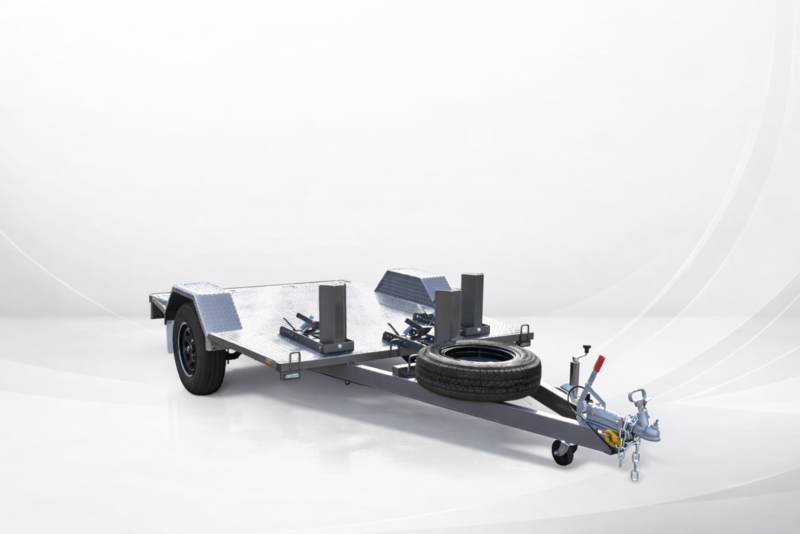
If you’re transporting motorbike, it’s important that you do so on a trailer that’s right for the job. A trailer that isn’t set up for motorbikes, doesn’t have sufficient tie down points, or isn’t right for your towing vehicle can mean that motorbikes get damaged in transit, costing you money and making your bike unrideable.
In this blog, we look at the most common mistakes people make when buying a motorbike trailer, and what you can do to make sure you don’t fall into any of these traps.
Trying to tow motorbikes on a box or flat top trailer
Trying to use a box trailer or a flat top trailer to tow motorbikes is a common mistake, and can be a costly one.
Trailers without wheel chocks mean that motorcycles are liable to sway when on the road, especially when braking or accelerating. In the worst case scenario, they tip sideways, hitting the floor or crashing into other bikes. This can potentially scratch paintwork, break mirrors, dent the fuel tank, bend the forks or damage brake cables.
Even if motorbikes stay upright, being transported on an unsuitable trailer while not properly secured can mean that road shocks get transferred through the bike. This is a real problem if you’re on uneven country roads, or if you need to go off-road. Warped wheels and subsequent handling problems on your bike can be result.
Using a motorbike trailer with effective chocks and a proper tie down system can help to prevent these common problems.
Buying a trailer that doesn’t let you secure your motorbikes properly
When you’re buying a motorbike trailer, you need to ensure that you’ll be able to secure your bikes so that they don’t move in transit, or topple over if you have to brake hard or make a sharp turn.
In order to ensure stability on the road at all times, a motorbike trailer ideally needs at least four tie-down points, two at the front and two at the rear. One-inch ratchet straps are the best solution, but avoid attaching them to the handlebars, seat or exhaust. They should be attached at the front above the forks, while the rear straps should be attached to the sub-frame or passenger foot rests. Straps should be positioned at around 50-60 degrees as the most effective way of distributing stress.
When looking for a motorbike trailer, make sure it has the capacity for you to be able to secure your bikes in this way as a basic minimum.
Make sure you can load and unload your motorbike safely
It’s too easy to damage your motorbikes when loading and uploading if the ramps are not up to the job.
If you buy a trailer without ramps, and instead try to use a makeshift system for getting your bikes on and off, there is the risk of their losing balance and being tipped off. To avoid this, you need low-angle loading ramps that are stable, and easy to fit and remove. They should also be able to stored securely and in such a way that they don’t impede the bike space or cover tie-down points.
An integrated ramp also needs to be able to handle the weight of your bike, both for loading safely and to ensure that the ramp doesn’t become bent out of shape with constant use.
Choose a motorbike trailer that is suited to your towing vehicle
All vehicles have a legal towing limit, so it’s important that any motorbike trailer you buy needs to align with this capacity. Towing capacity is determined by the vehicle manufacturer and is the maximum aggregate trailer mass (ATM) it can safely tow.
If you are involved in an accident and are found to be towing a trailer that is exceeds capacity, this could make you legally liable and void your insurance.
In addition, towing a motorbike trailer that is too heavy for your vehicle can impact on performance, leading to instability on the road and potentially damage your bikes. It can also damage the suspension on your towing vehicle, especially if you regularly drive on rough or unsurfaced roads.
Why the right trailer brakes and suspension matter
Having the right brakes and suspension on a motorbike trailer is critical when considering a new motorbike trailer, as they help to ensure a safe and smooth towing experience and reduce the risk of your motorbikes being damaged in transit.
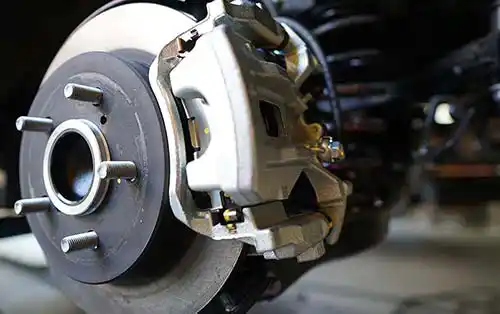
If you’re looking at a trailer with a gross trailer mass (GTM) up to 2 tonnes, mechanical disc brakes with calipers will usually be sufficient, although hydraulic disc brakes will give you improved stopping power. However, if the GTM of the trailer is in excess of 2 tonnes, electric brakes are required in South Australia. You should ensure that the trailer has sufficient braking capacity for the load.
The suspension absorbs shocks from the road, minimising the force that is transferred to the trailer and therefore your bike, so having the right suspension system for the size and ATM of your trailer is essential.
If the trailer has an ATM up to 1,990 kg, slipper or eye-to-eye spring suspension will likely be suitable. However, if you’re towing a trailer with an ATM above 2,000kg, rocker roller suspension will provide better balance, meaning that the weight of the load is more evenly distributed. This will in turn reduce how much shock from the road is transferred to your motorbikes and provide greater stability, reducing the risk of damage.
Get expert advice before buying a motorbike trailer
If you’re looking to buy a motorbike trailer that will keep your bikes safe while in transit, the five points we’ve outlined above will help you to make an informed decision.
However, if you’d like expert advice from Adelaide’s leading trailer builder, talk to the team at Basic Trailers. We can help you choose the right motorbike trailer to meet your needs, and are always happy to discuss any add-ons or custom features you require.
Call our friendly team on 1300 770 770 or email sales@basictrailers.com.au and we'll be happy to discuss your specific requirements.